


 Teaching and learning materials matter, but their presence in a classroom is only the beginning.
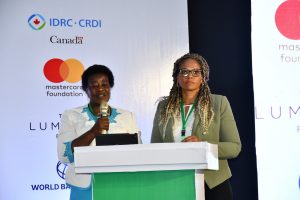
That was a central message I was pleased to explore at FLEX2026, the Africa Foundational Learning Exchange, convened by the Association for the Development of Education in Africa (ADEA) in Lilongwe, Malawi. Alongside my CODE colleague Agatha Njunga, I co-facilitated and moderated Session 2D, From Delivery to Impact: Making Teaching Materials Count, with colleagues from across the region.
Our session intentionally connected three perspectives. Usawa Agenda and APHRC from Kenya brought research evidence on the availability and use of teaching and learning materials and the factors shaping teacher practice. Botswana’s Ministry of Child Welfare and Basic Education brought the policy and system perspective, including how curriculum alignment, teacher support, leadership, and monitoring help move commitments into practice. CODE brought the practical, classroom-level implementation lens through the Tiyeni Tiwerenge / Let’s Read Ntchisi (TT-LRN) project in Malawi, working alongside the Ntchisi District Education Office and FAWEMA.
For me, the connection between those perspectives points to a broader lesson. We need to stop thinking about teaching materials as stand-alone inputs. Their impact depends on whether teachers can select, adapt, and integrate them responsively, and whether learners are actively engaging with them.
That question of use quickly becomes a question of how teacher support takes shape. Too often, training, coaching, and peer learning operate as separate activities. I believe stronger teaching and learning environments develop when these supports are connected through a coherent cycle of professional learning. Ongoing training builds knowledge and skills. Reflective coaching helps teachers put them into practice and respond to what learners are showing. Peer learning creates space to reflect, solve problems together, and identify what support is needed next. Each part informs the next.
Over time, the goal is to move beyond compliance and evaluation alone. It is teachers growing as professionals who can put knowledge and skills into practice, exercise judgement, adapt and solve problems as they arise, and respond to learners with increasing confidence and agency.
Our problem-solving clinic brought this interconnectedness to life. Participants from countries across Africa shared practical experience around teacher support, instructional leadership, local adaptation, community involvement, classroom conditions, and stronger feedback loops between classroom practice and system decision-making. Taken together, the discussion reinforced for me that there is no single solution. Materials, pedagogy, professional learning, leadership, and the conditions surrounding the classroom all need to work together, but those conditions show up differently across contexts. What works therefore needs to be grounded in the realities of teachers, learners, schools, communities, and education systems.
For CODE, FLEX was an opportunity to contribute what we are learning through implementation, listen to and learn from African governments and practitioners, test our own thinking, and bring those insights into our ongoing collaboration with partners and government counterparts. That kind of exchange matters deeply. It allows us to keep learning from practice, from evidence, and from one another, as we continue to refine our approaches together.