


 When CODE says we work in partnership, here is what we mean. We don’t arrive with a plan and ask local organizations to carry it out. We build the plan together, and we measure success by what is still happening after we step back.
Teaching and Learning in Fragile Contexts (TLFC) is a good example. Over four years, CODE worked in Sierra Leone and Liberia with two local partners: The Association of Language and Literacy Educators (TALLE-RSL) in Sierra Leone, and the WE-CARE Foundation in Liberia. Together we worked with 10 teacher training institutions and 72 primary schools where student teachers practice in real classrooms.
Each partner brought something CODE could not. Our partners know their education systems, their schools and their communities, and they hold relationships with ministries and institutions that make change possible. CODE brought program design, technical support, and an amazing community of supporters and donors from Canada, along with the commitment to stay the course through political transitions, rising costs and school closures. When the 2023 elections interrupted work in Sierra Leone, and when low enrolment in Liberia shrank the number of student teachers, the partners adapted together. In Liberia, that meant expanding from four to six training institutions.
Here is what that partnership made possible. TLFC supported 154 teacher educators, trained 504 classroom teachers, and gave 1,035 student teachers training and classroom practice. Through their schools, the project reached 47,495 children, more than twice what we set out to do. Local writers created 12 new reading anthologies for Grades 1 to 6, and 71,503 books reached classrooms. In Liberia, 83% of Grade 2 children in practicum schools could answer at least three of five reading comprehension questions at the end of the project, up from 14% when it began.
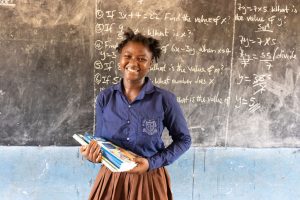
One of our favourite stories comes from Sierra Leone. Kadijatu, a student teacher, began her classroom practice unsure whether she had the skills to make a difference. With mentoring from experienced teachers, she began grouping children by ability, turning phonics lessons into games, and making sure girls and boys both had a voice. She wrote that she was “becoming the teacher I had always hoped to be.” Then she began sharing what worked with other student teachers.
In Liberia, 86 experienced teachers who had never received formal qualifications worked toward the government’s C Certificate. In March 2026, 70 of them earned it, and now they help prepare the next generation of teachers.
But the numbers only tell part of the story. The deeper measure is what stays. By the end of the project, 11 of 15 practicum schools tracked from start to finish had a dedicated way to prepare and support student teachers, up from just 2. One Sierra Leone training institution began paying for student teacher monitoring from its own budget. Ministries and training institutions approved a shared classroom observation tool. WE-CARE has since been invited to contribute to Liberia’s national review of early reading curriculum.
There is still work ahead, and our partners are the first to say so. Supervision and mentoring need steady funding, and the approaches need to reach beyond the institutions where we worked. That is why partnership matters. It means the work belongs to the people who will still be there next year, and the year after that.
Your support helps make CODE the kind of organization that can do this: one that listens first, shares ownership, and builds something strong enough for others to carry forward. Thank you for being part of it.